

Business leader Ronny Zaman has built a global portfolio of companies spanning a diverse range of industries. This article will look at business strategy, providing pointers on how to create a well-rounded business plan to serve as a blueprint for commercial success.
A well-crafted business plan crystalises the corporate vision, pinpointing overarching objectives and breaking down goals into incremental steps. Its cuts through the noise, helping the management team to stay focused on what truly matters to the business, ensuring its sustained success and growth. The attached infographic provides an overview of the key stages in a business’s lifecycle.
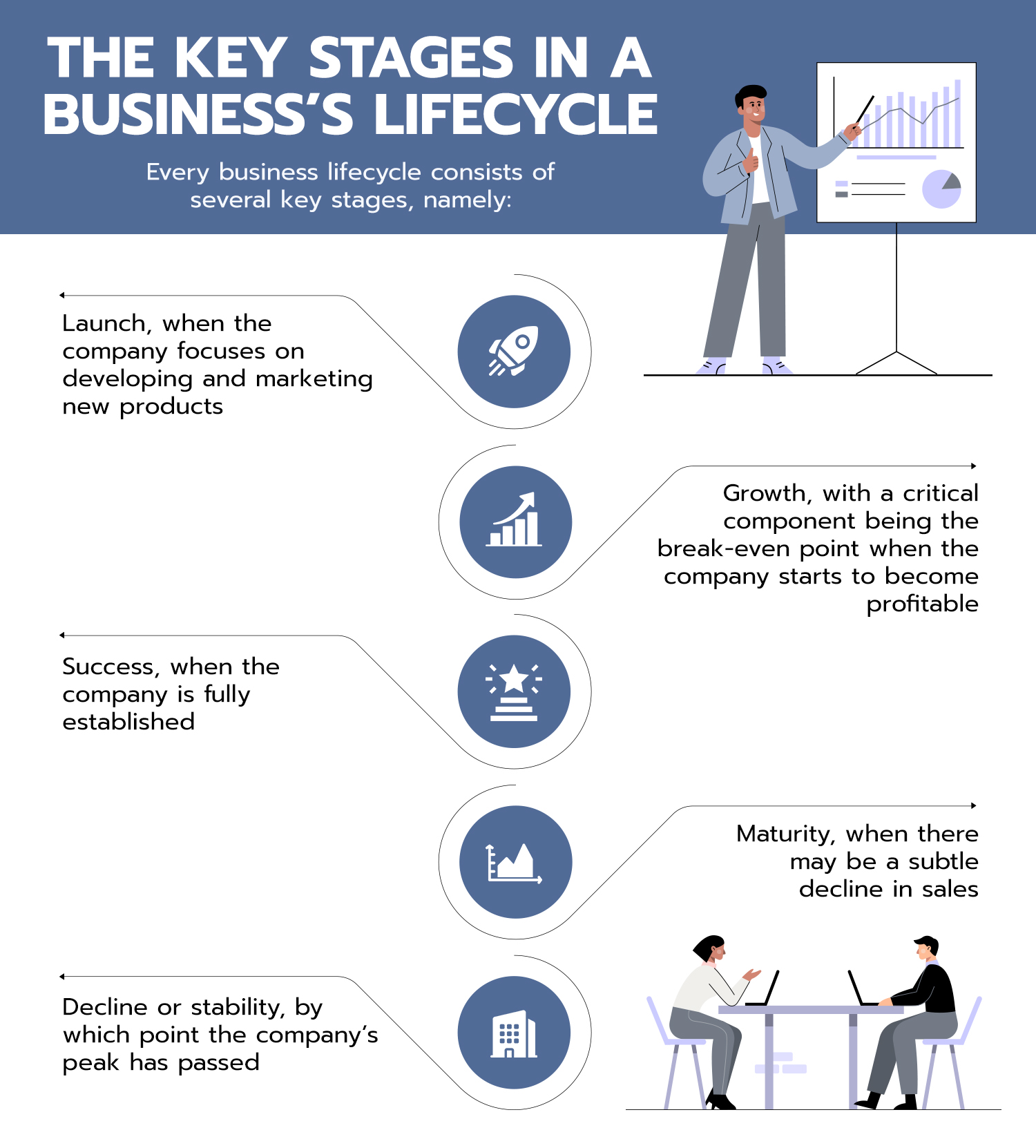
For potential investors, the business plan is their first point of reference, delineating the founder’s vision, demonstrating their financial acumen and conveying a roadmap to profit. Proactive business ownership involves identifying potential pitfalls early on, with the business plan helping the organisation prepare for the unexpected, developing strategies and mitigating risk to safeguard the profitability and longevity of the business.
A business plan is a living document that should be regularly reviewed and updated in line with market shifts, changes in consumer behaviour and the evolution of the business. Although it is important to be ambitious, founders must also be realistic and avoid falling into the trap of underestimating costs and over-inflating projections, as an unrealistic business plan will alienate investors by demonstrating a lack of business acumen and vision.
Writing a compelling business plan requires a clear understanding of the business’s target market, goals and USP. Key components in a well-crafted business plan include a company description, overview of business goals, market analysis, outline of products and services, a financial plan and an executive summary.
The appropriate format for a business plan varies from organisation to organisation and industry to industry. Take for example a business plan for a restaurant, which might incorporate location demographics and a sample menu, whereas a tech start-up is likely to focus on issues such as development timelines and patent protections. Business size is also a major consideration, with a business plan for a small enterprise looking very different to one for a multinational organisation. The complexity of the business plan will also differ according to its purpose. For example, if the business plan is intended solely for internal use, it is likely to focus on strategy and team organisation, while a business plan crafted with the intention of enticing investors will require extensive market research and financial analysis. The attached video provides an overview of the key components of a well-crafted executive summary.