

Ronny Zaman is a seasoned entrepreneur and business leader who serves as chairman of Navana Pharmaceuticals, Anowara Construction Ltd and Gas One. This article will look at sustainability and how embracing green business practices can help organisations to not only lower their ecological impact but also attract customers and top talent by enhancing brand identity.
According to a report by the FSC, 80% of the world’s CO2 emissions are produced by just 57 companies. The FSC report highlights the need for businesses to shoulder the bulk of responsibility for climate change, calling on organisations large and small to contribute to collective global actions to protect the environment and life on Earth by embracing sustainable business practices.
Companies can implement a range of measures to reduce their carbon footprint, for example, by auditing their supply chains, enhancing links with local communities, maximising energy efficiency and minimising business waste. Sustainability is about identifying and executing efficient processes that help protect the planet and its resources, people, ecosystems, biodiversity and cultures. The attached PDF looks at climate change and why it disproportionately affects already disadvantaged populations.
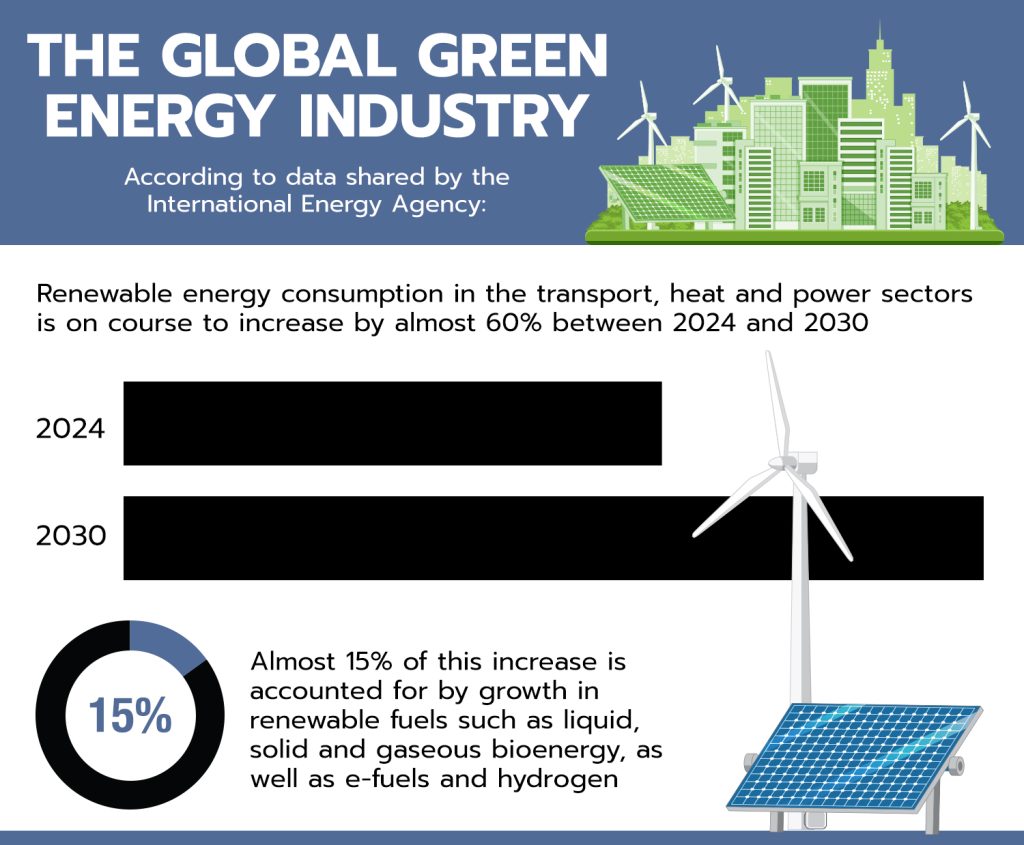
With 64% of consumers agreeing that purchasing sustainable products makes them happy, according to the FSC report, pivoting to accommodate consumer preferences by placing sustainability front and centre helps businesses to boost their brand reputation. In addition, by becoming more energy efficient, enterprises can drive down production and overhead costs, increasing long-term profitability. The attached infographic runs through some interesting global statistics about green energy.
In addition to widening the organisation’s commercial reach, increasing revenue and boosting resilience, embracing sustainability also helps companies to attract and retain talented employees. The FSC report reveals that 69% of employees want the businesses they work for to invest in sustainability. With 42% of consumers changing their purchasing habits based on environmental and social impact, forward-looking businesses around the world are recognising the need to commit to sustainable practices, protecting the environment and people all over the world.
To implement company-wide improvements, organisations must define sustainability commitments and purpose, align with vendors and stakeholders, set a timeline and goals, and continually evaluate new policies. Establishing and communicating new policies to all stakeholders is crucial in terms of ensuring everyone is pulling towards the same goals. Businesses must then create a sustainability strategy, providing a clear roadmap for turning their environmental efforts into action. The embedded video provides an overview of the key components of a well-crafted sustainability strategy.