As chairman of Navana Pharmaceuticals, Anowara Construction Ltd and Gas One, Ronny Zaman heads an expansive business empire with interests in an array of different market sectors. This article will look at leading through change, an integral aptitude to ensure businesses thrive rather than merely survive.
In a world defined by change, adaptability is integral to survival for businesses today. Nevertheless, merely maintaining the status quo is simply not enough anymore. Effective leaders need to take change readiness further than just survival, setting themselves apart through their change leadership skills.
According to a recent report by Forbes, just 13% of today’s business leaders feel adequately prepared to manage change, representing a sharp decline on the 25% reported five years ago. According to new data, just 8% of executives benefit from strong change leadership skills.
Rosey Rhyne works as a senior research manager for the DDI Center for Analytics and Behavioral Research. She suggests that companies are failing to adequately prepare for change, with many business leaders maintaining a focus on day-to-day demands. According to Ms Rhyne, research consistently shows that change leadership falters at a behavioural level, with leaders struggling to explain why change is necessary, address resistance, engage others in shaping that change and reinforcing new ways of working.
Change management is a distinct concept from leading through change, with the former concentrating on mechanics, addressing how change is structured, executed and planned, while leading through change goes much further, addressing how teams experience disruption and how business leaders drive outcomes through it. The embedded video takes a closer look at leading through changing conditions and the aptitudes necessary for a successful transition.
In a world reshaped by extraordinary change, business leadership has never been more important and complex. From the pandemic to the rise of AI, the convergence of global disruptions has exposed vulnerabilities while simultaneously redefining workplace expectations, testing the resilience of leaders and organisations.
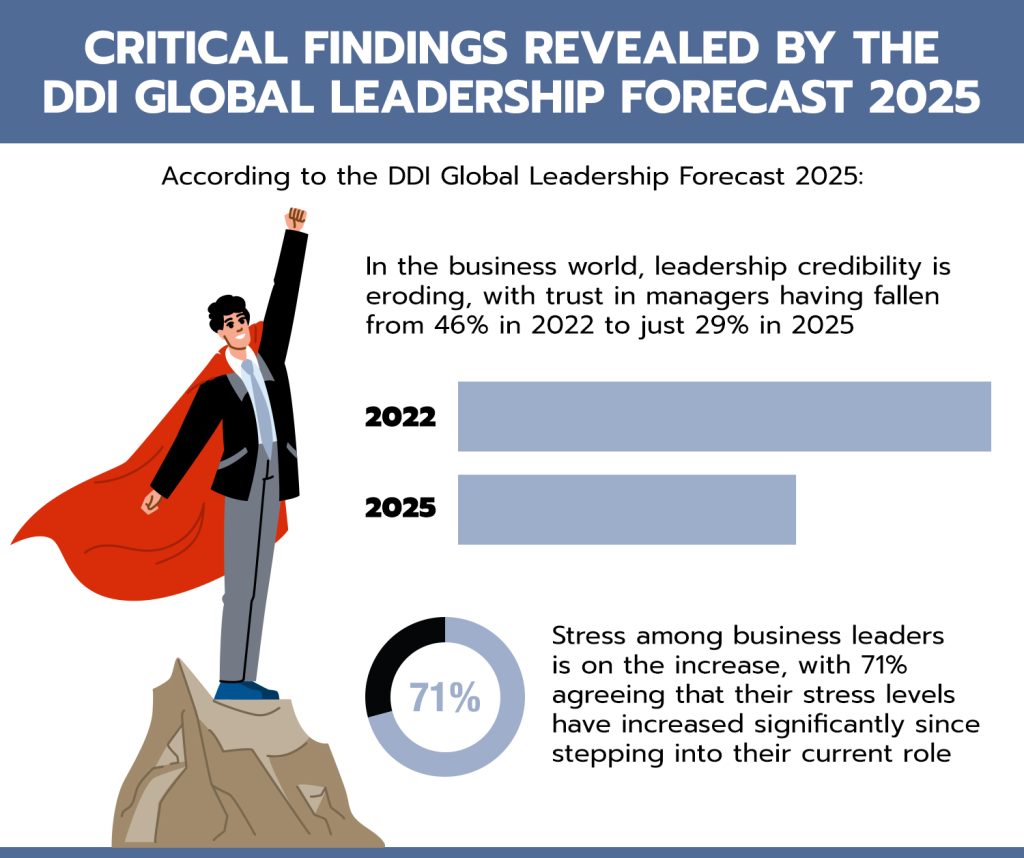
With a growing leadership credibility crisis afoot, trust, the currency of organisational success, is rapidly deteriorating in the volatile global landscape. Just 32% of leaders express confidence in senior leadership according to a DDI report. In a perfect storm of economic shocks, with the rapid advancement of AI creating widespread job insecurity, trust is becoming harder to maintain and easier to erode. The DDI report suggests that trust is far more than just a byproduct of good leadership, providing firm foundations for employee engagement, inclusion and collaboration. The attached infographic features more fascinating findings laid bare by the DDI report.